Shengxuan Qiu 邱圣轩

Undergraduate Student at Peking University · Incoming Ph.D. Student at PKU SEC Lab

Hi! I am Shengxuan Qiu (邱圣轩), an undergraduate student in Microelectronics Science and Engineering at the School of Electronics Engineering and Computer Science, Peking University. I am currently conducting research at PKU SEC Lab under the supervision of Prof. Meng Li, and I will continue there as a Ph.D. student starting in Fall 2027.

My research focuses on efficient AI systems across the model–system–hardware stack. I am broadly interested in making emerging AI workloads more efficient through better algorithms, serving systems, runtime mechanisms, and hardware–software co-design.
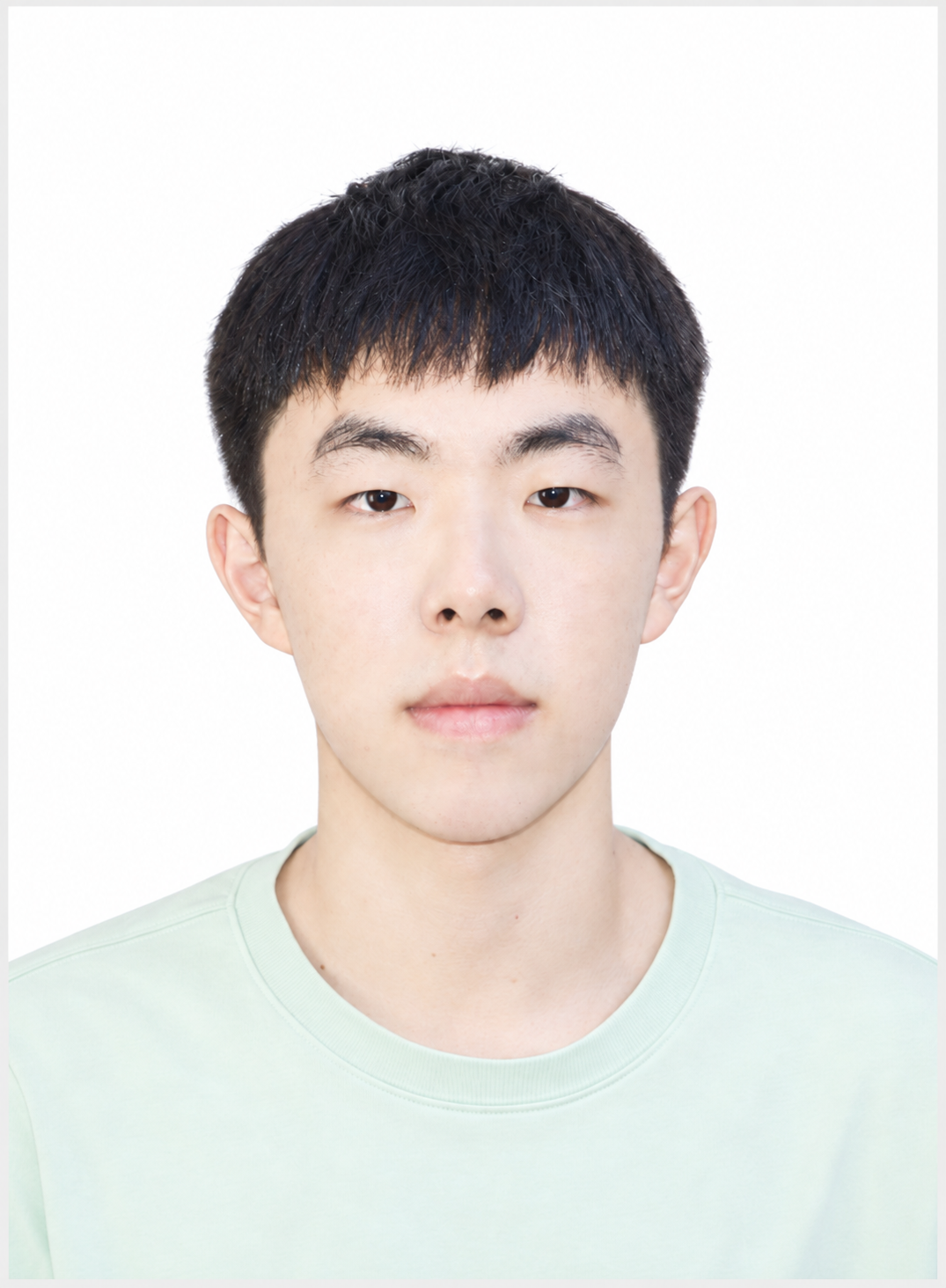
Shengxuan Qiu

🔬 Research

  • AI Infrastructure & LLM Serving: distributed inference, scheduling, KV-cache management, speculative execution, runtime systems, and serving-system optimization.
  • Reasoning & Agentic Systems: test-time scaling, multi-path reasoning, Tree-of-Thought, agentic workloads, and multi-agent systems.
  • Hardware–Software Co-design: MoE acceleration, GPU/NPU systems, 3D near-memory processing, GPU-PIM architectures, and memory-centric AI acceleration.

New preprint: MAServeBench — Composable hierarchical collaboration workloads and dependency-preserving Hierarchical Semantic Traces enable fixed-work comparisons of multi-agent serving systems, linking task completion to runtime and GPU/NPU hardware behavior. [PDF] [Code]

🔥 News

2026.11.04 Our paper Tetris, on accelerating composable test-time scaling with GPU-PIM co-design, has been accepted to HPCA 2027!
2026.10.29 Our latest preprint, MAServeBench, is now on arXiv! It benchmarks hierarchical multi-agent collaboration through composable workloads and dependency-preserving traces, connecting serving-system behavior with task-level performance and GPU/NPU bottlenecks. [Code]
2026.09.24 I am very happy to receive the National Scholarship, a top national honor for undergraduate students in China. I am grateful that my work over the past year has been recognized.
2026.09.01 Our work on MoE scheduling for 3D near-memory processing architectures, HDA-MoE, was accepted to IEEE TCAD. I am the third author.
2026.08.17 Our exploration of self-speculative decoding for MoE models, S²-MoE, is now available on arXiv. Welcome to check it out!
2026.05.01 The first research project I led, HyPER, was accepted to ICML 2026. Many thanks to my advisor and collaborators for their guidance and support.
2026.03.27 My first collaborative research work, SPEX, was accepted to OSDI 2026. I am the third author.
2025.09 I joined PKU SEC Lab and started my research under the supervision of Prof. Meng Li.

📝 Selected Publications

HPCA '27
Tetris: Accelerating Composable Test-Time Scaling on GPU-PIM Systems via Adaptive Mapping, Control, and Memory Management
Shengxuan Qiu, Haochen Huang, Tenghao Zhao, Meng Li
IEEE International Symposium on High-Performance Computer Architecture (HPCA), 2027
arXiv '26
MAServeBench: Benchmarking Multi-Agent LLM Serving Systems with Hierarchical Collaboration Workloads
Shengxuan Qiu, Haochen Huang, Shuzhang Zhong, Zizhuo Fu, Zebin Yang, Jianming Tong, Meng Li
arXiv preprint arXiv:2610.40293, October 2026
ICML '26
HyPER: Bridging Exploration and Exploitation for Scalable LLM Reasoning with Hypothesis Path Expansion and Reduction
Shengxuan Qiu*, Haochen Huang*, Shuzhang Zhong, Pengfei Zuo, Meng Li
43rd International Conference on Machine Learning (ICML), 2026 · * equal contribution
OSDI '26
Breaking the Reward Barrier: Accelerating Tree-of-Thought Reasoning via Speculative Exploration
Shuzhang Zhong, Haochen Huang, Shengxuan Qiu, Pengfei Zuo, Runsheng Wang, Meng Li
20th USENIX Symposium on Operating Systems Design and Implementation (OSDI), 2026
TCAD '26
HDA-MoE: Hybrid Parallelism and Dynamic, Adaptive Scheduling for Mixture-of-Experts with 3D Near-Memory Processing
Haochen Huang, Shuzhang Zhong, Shengxuan Qiu, Zhe Zhang, Shuangchen Li, Cong Li, Dimin Niu, Hongzhong Zheng, Guangyu Sun, Runsheng Wang, Meng Li
IEEE Transactions on Computer-Aided Design of Integrated Circuits and Systems (TCAD), 2026